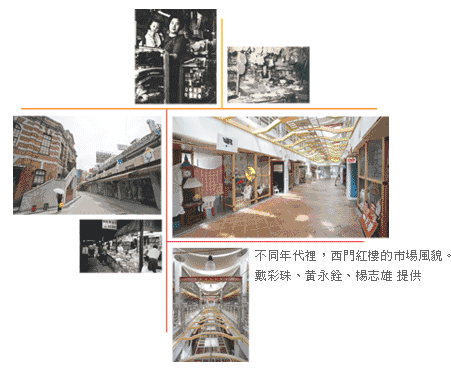
Having become a historical landmark, surviving fire, and witnessing protests at its planned demolition, Red House was finally given another lease on life in 2002 when the Paper Windmill Foundation took responsibility for its reconstruction. With almost one thousand performances and events held there within five years, Red House was once again infused with culture, becoming a platform for diverse art, and recapturing the glory from when it was first built.
The style adopted for Red House by architecture Kondo Juro is one of magnificence, while they symbolism of the Octagonal Hall and Cross Building together are unseen anywhere else in the world. At the time, people deeply believed these symbols could repel evil and bring blessings. Looking back at its 100 years of history, it has been bombed by USA forces, burned and plundered, yet it is still with us today, which evidences that it truly is a blessed place.
Red House has also been a place of harmony between Japanese and Taiwanese during the occupation, as well as a platform for a diversity of artistic performances after the war. Today it is a social magnet and destination for overseas tourists, where stars hold concerts, dance troupes give performances, and gay pride parades are held. The legend of Red House has come full circle, as its memories from its early days are recalled, its beauty continues to inspire, and its blessings continue to grow.
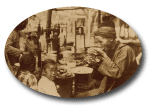
就可以落地做生意。
臺北市文獻會提供
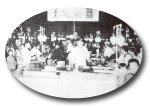
「市場」公共建設。
萬華區公所提供
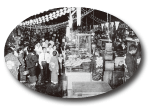
水道,排放汙水,市場
裡 禁止宰殺家禽魚類,
以免髒污。
吳是虹提供
未來,西門紅樓裡會陳列創意商品,十字樓現在則已有16攤年輕有創意的小頭家,未來西門紅樓會定位成創意育成中心,就像是先哨站,一些嶄新概念會在這兒冒芽。
回到100年前,1908年時,日本人規劃西門紅樓時,即擘劃了嶄新概念,相對於國人自古習慣挑著擔子隨地擺攤的習性,西門市場是台灣第一批有「市場規劃」公共建設。市場裡有下水道,讓污水可以排出,市場裡禁止宰殺家禽魚類,以免髒污,1925年還舉辦「西門市場蔬果品評會」,至今一些研究日據時期的論文,都將該品評會列為重要活動之一。
整個商場的規劃大致是,八角樓賣乾貨,十字樓賣濕貨,前者如洋雜貨、菓子,後者是蔬果生鮮食品等,至1928年環繞廣場的賣店落成,規劃為衣服及日常用品五金等…,結合市場、廣場、賣店三位一體的概念十分完整。光復後,西門市場恢復國人現宰生鮮的習性,廣場也逐漸成為違建攤販佔用; 至2001年都發局的調查指出,「基地內攤位總數為262攤,…,總體而言,西門市場內之業種雜亂無序」,當然,那是反應西區沒落的現象,只是風水輪流轉,現在,這兒再度成為人潮吸引聚集地。